
When quality creates an alliance for the customer.
In an industrial company, a defect is never just a simple anomaly. It is a revelation. A mirror held up to our processes, our relationships, our shared understanding of work. And sometimes, a simple defect can transform an organization.
A minor anomaly… but a revealing one
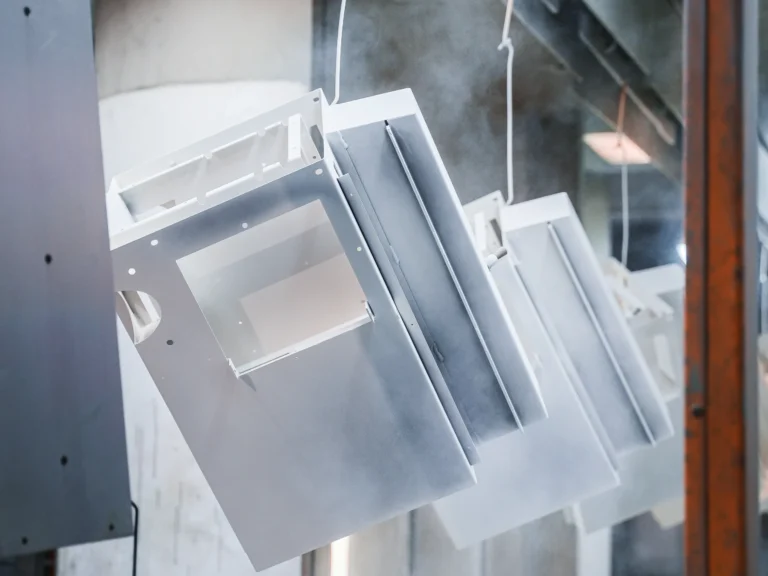
Our company manufactures machined parts that are intended to be painted. The problem is that certain machined areas must remain unpainted. During the manufacture of an initial sample, an anomaly is detected: paint covers an area that should be protected. The team corrects the problem immediately, but does not seek to understand the origin of the defect.
No root cause analysis. No in-depth discussion. The symptom was treated, but the system remained unchanged.
A few weeks later, series production begins. The defect reappears, and this time it goes unnoticed by the paint subcontractor. Why? Because the customer’s requirement had never been translated into clear instructions or shared with the last link in the chain.
What we would have done before: look for someone to blame
In a traditional scenario, everyone would have hidden behind their own boundaries. Production versus quality, subcontractor versus customer, technical services versus sales. A cascade of justifications would have been launched.
But we understood one essential thing:
“A bad system will beat a good person every time.” — W. Edwards Deming
Even competent and committed people cannot guarantee quality if the system does not support them. It is the system, not the individuals, that needs to evolve.
What we did with Gemba: learning together
This time, we reacted differently.
We went to the field—the Gemba—in front of the non-compliant part. We brought together six key players in the process: operators, quality, logistics, painting subcontractor, methods, and sales. Management was present, not to make decisions, but to listen and provide support.
Together, we described the reality of the flow, as it actually happened. Not to assign blame, but to understand how our collective construction had allowed the defect to exist.
This cross-disciplinary perspective highlighted:
- Vague instructions
- A forgotten checkpoint
- A lack of communication with the subcontractor
- A poorly communicated customer requirement
And above all, an overly fragmented system, where everyone acts without a shared vision.
What we changed: coordination, not instructions
We made three simple, structural decisions:
- Include the painting subcontractor in contract reviews from the early stages
- Add explicit visual markings to the area not to be painted
- Deploy a physical masking device to make it impossible to repeat the error
But the real change lies elsewhere: we strengthened inter-departmental coordination from the product design stage onwards, treating each participant as a customer of the previous link in the chain.
What this defect taught us
We have learned two key lessons from this experience:
1/ A defect is an opportunity for collective progress.
2/ Quality cannot be controlled: it must be designed in from the outset.
As Deming put it in his third principle of management: “Build quality into the product as early as possible in the development process, so that you don’t have to inspect it extensively later.” — W. Edwards Deming, Out of the Crisis
What we have experienced goes far beyond solving a specific problem. We have experienced, in concrete terms, what it means to build a learning system that is aligned and oriented towards the end customer.
One defect, six people, one truth: quality is about connection.